
Genoa Presents 32 Areas for Regeneration: New Opportunities for Investors and Businesses
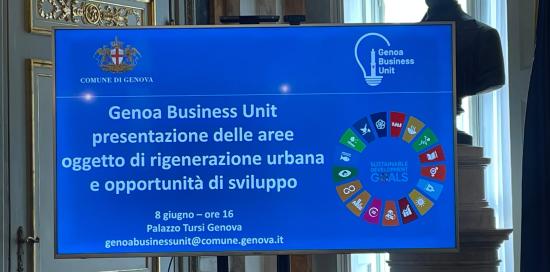
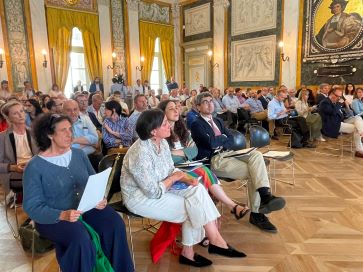
A public meeting promoted by the Genoa Business Unit was held at Palazzo Tursi to present the urban regeneration areas and the related development opportunities. The initiative brought to the attention of businesses, economic operators and stakeholders a programme aimed at the recovery and enhancement of 32 disused or underused production areas within the municipal territory, with the objective of restoring function, value and attractiveness to spaces that are currently, at least in part, unused.
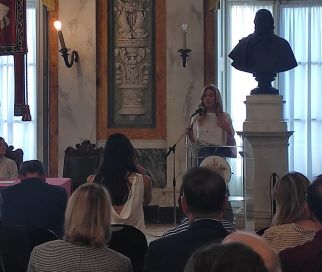
The closing remarks were delivered by Mayor Silvia Salis, who highlighted the strategic importance of urban regeneration for the city’s development. In a dense and complex urban context such as Genoa, recovering disused or underused areas means not only reactivating spaces that currently lack a function, but also making a choice in favour of urban, environmental and economic quality. This is the purpose of the project: to offer investors a clear framework of areas, tools, incentives and opportunities for temporary reuse, while maintaining a strong public role in steering transformations that are consistent with Genoa’s productive, port-related, technological and urban vocation.
The plan largely concerns privately owned buildings and complexes, located mainly in the city’s valleys — Valpolcevera, Valbisagno, Val Varenna, Val Cerusa and Val Leira — and in the Sestri Ponente area. These are complemented by a number of maritime state-owned properties, located between Sampierdarena and Voltri, identified by the Western Ligurian Sea Port Authority. The areas were selected on the basis of the survey of disused production zones carried out by the Municipal Administration in the early months of 2026.
During the meeting, the tools made available to support the recovery of the existing building stock were presented: simplifications linked to temporary uses, regeneration incentives, reductions in construction fees for works on existing buildings, and the possibility of combining these benefits with those provided under the Simplified Logistics Zones and regional aid schemes. Together, these measures are designed to make it easier to launch new projects and to support operators throughout the different stages of property transformation.
Temporary uses are one of the most useful tools for reactivating spaces, including during the intermediate stages of regeneration processes. They make it possible to test new functions without necessarily waiting for more complex works to be completed, thereby facilitating the establishment of small businesses, start-ups, innovative organisations and operators looking for accessible and flexible spaces. In this way, regeneration can proceed through successive steps, adapting to the characteristics of each place and to market needs.
The programme nevertheless maintains a number of clear limits. Medium-sized and large commercial facilities exceeding 250 square metres will not be permitted in the areas concerned, nor will activities that are incompatible with the objectives of spatial planning, urban quality and environmental sustainability. The approach is intended to encourage interventions that are consistent with their context, avoiding isolated transformations or developments that are not in line with the vocation of the areas involved.
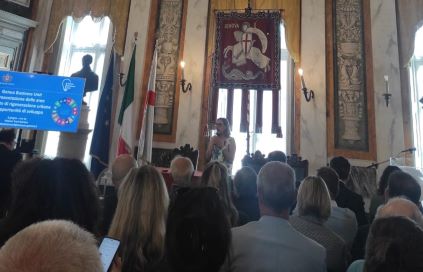
Speakers at the meeting included, among others, Deputy Mayor and Councillor for Economic Development and Port-City Relations Alessandro Terrile, the Director General of the Municipality of Genoa Pasquale Criscuolo, Councillor for Urban Planning Francesca Coppola, Councillor for Municipal Assets Davide Patrone, the Port Authority represented by Paola Giampietri, and Confindustria Genova, represented by Vice-President Andrea Carioti. The presence of the various stakeholders involved confirmed the project’s overall approach: to build a collaborative process between the Municipality, the port system, the business community and the owners of the areas, in order to make the matching of demand and supply for spaces more effective.
Alongside the enhancement of private areas, the Administration has also opened up a second perspective linked to public assets. In this respect, the work being carried out with the State Property Agency and with other public bodies in the city may help connect available properties, local needs and reuse strategies, strengthening coordination between the different institutional levels.
Through this programme, Genoa is offering investors an initial, concrete framework for action, based on already identified areas and on tools designed to facilitate their transformation. Urban regeneration thus becomes not only an action aimed at building recovery, but also an opportunity to strengthen the competitiveness of the local area, attract new activities and support the city’s economic evolution without dispersing the value of its existing assets.

 Italiano